Client-Facing Language
Clear, Credible, Non-Jargony
This version explains the philosophy without using the word "chaordic"
How We Work
The complete explanation for proposals and presentations
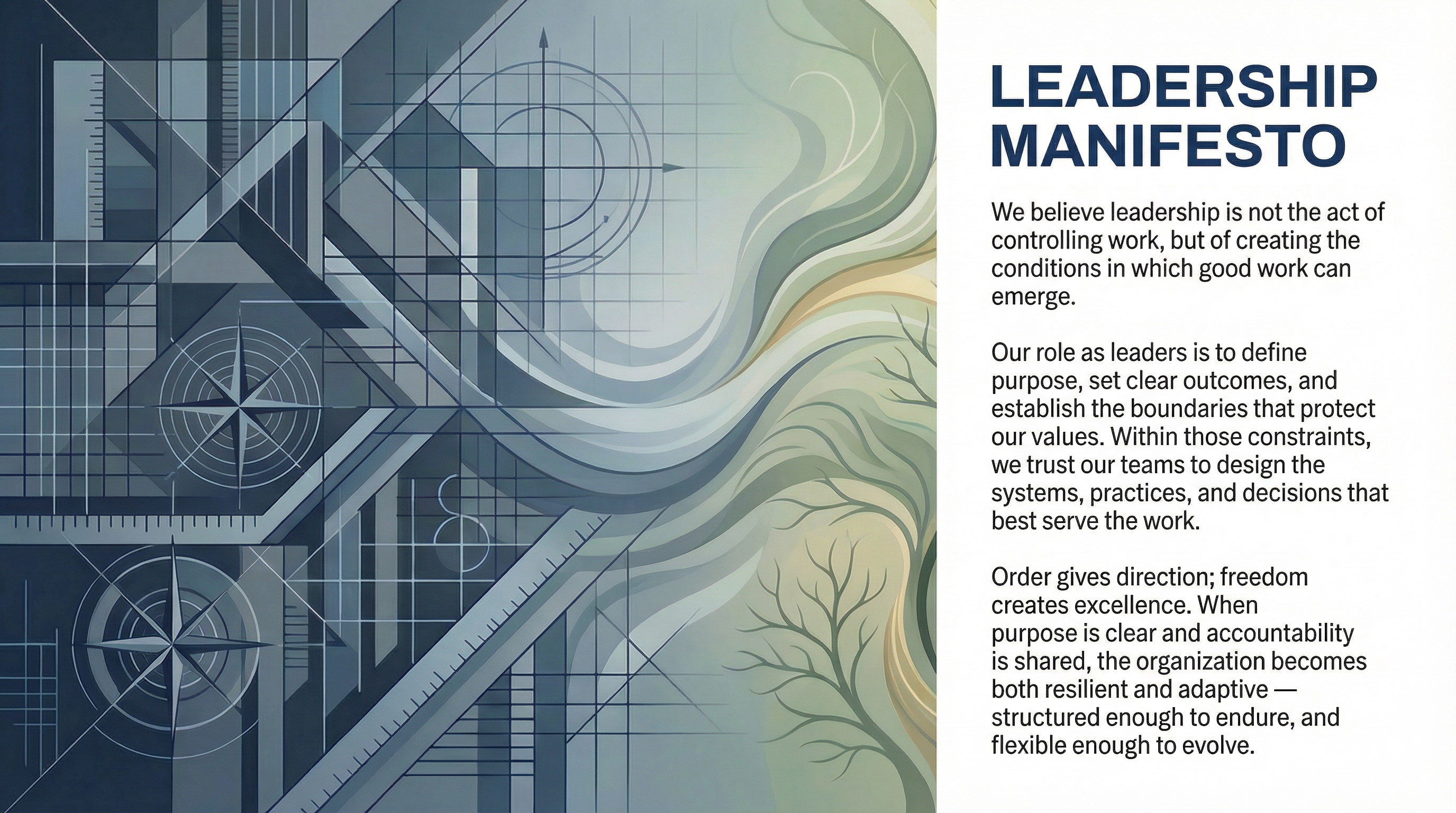
We believe great outcomes come from clear intent and shared responsibility—not rigid control. Our leadership defines purpose, success criteria, and non-negotiable values. From there, teams design the systems and practices best suited to the work at hand.
This approach allows us to be disciplined where it matters most, flexible where conditions change, and accountable at every level. The result is work that is both consistent in quality and adaptive in execution.
One-Sentence Version
For proposals or presentations
"We lead by defining outcomes and values clearly, then trusting skilled teams to determine the best way forward."
Visual Support for Client Presentations
Use these graphics to illustrate the philosophy visually

Usage Examples
How to incorporate this language in different contexts
Section: Our Approach
"We lead by defining outcomes and values clearly, then trusting skilled teams to determine the best way forward. This allows us to maintain high standards while adapting to the unique conditions of each project."
When Asked About Process
"We'll work with you to define exactly what success looks like and what constraints matter most. Then our team designs the best approach for your specific situation—disciplined where it matters, flexible where conditions change."
About Page or Philosophy Section
"We believe great outcomes come from clear intent and shared responsibility. Our leadership defines purpose and success criteria, while teams design the systems best suited to each project. The result: work that's both consistent in quality and adaptive in execution."
When Explaining Decision-Making
"You'll work directly with the people making decisions about your project. We empower our teams with clear outcomes and the authority to determine the best path forward. This means faster decisions and solutions tailored to your needs."
Key Phrases to Use
Language that communicates the philosophy without jargon
- •"Define outcomes clearly"
- •"Explicit success criteria"
- •"Non-negotiable values"
- •"Trusted teams"
- •"Empowered decision-making"
- •"Accountable at every level"
- •"Consistent quality"
- •"Adaptive execution"
- •"Flexible where conditions change"
Final Note (Leader to Leader)
What you've built here is not a framework to roll out.
It's a way of thinking you must embody first.