User Manual
How We Work, Decide, and Build—Together
A comprehensive guide for implementing Chaordic Management in your organization
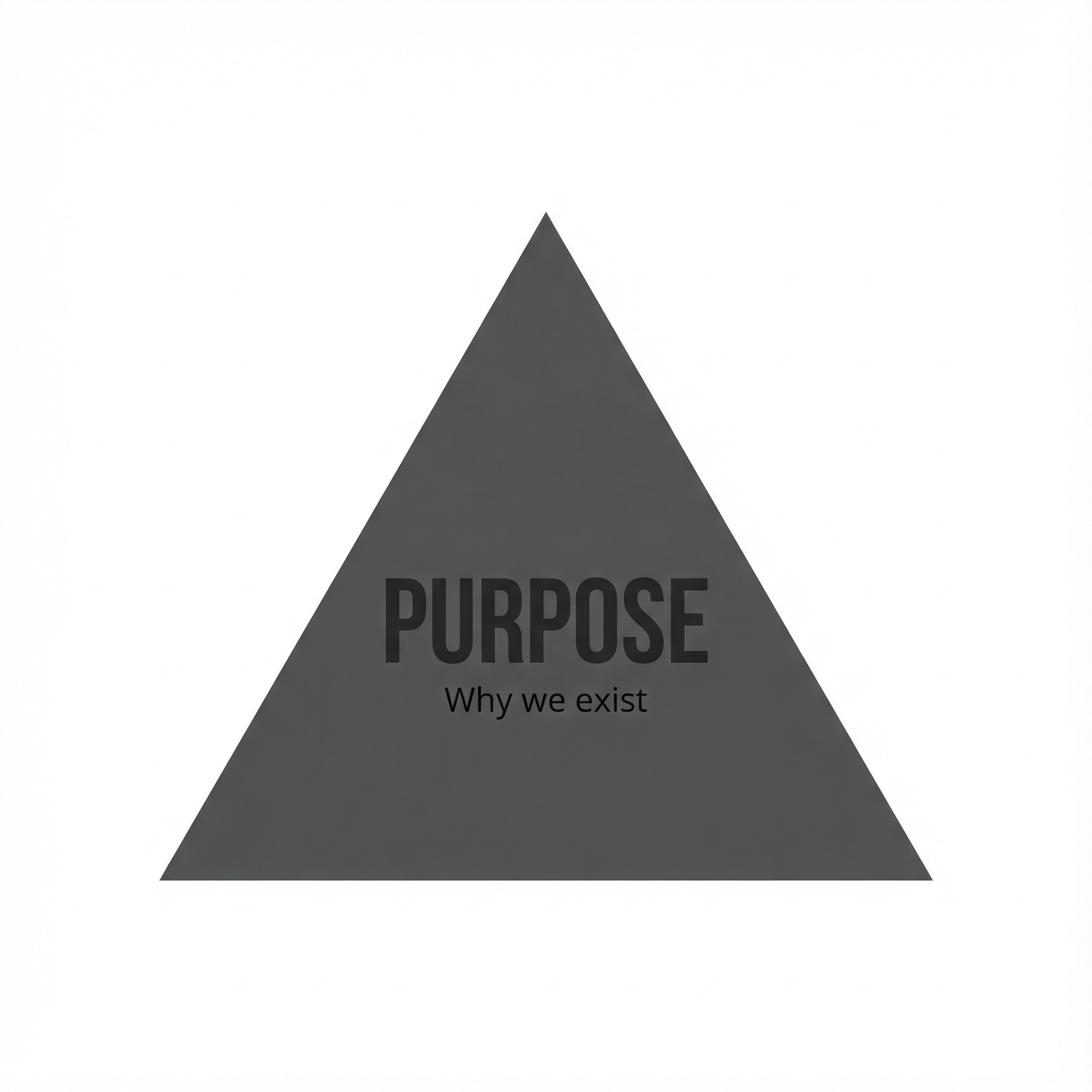
Purpose
Who We Are
This is not marketing language. It is a constraint on our decisions.
Using the tools of design, architecture, and construction to improve quality of life for our clients and well-being of the community.
Remodeling older urban homes means:
- •Unknown conditions
- •Layered histories
- •Structural, energy, and durability challenges
- •Emotional attachment from clients
Because of this, rigid systems fail and judgment matters. We operate with clear intent and flexible execution by design.
Leadership
How Leadership Works
- ✗Approve every decision
- ✗Dictate methods
- ✗Be the smartest person in the room
- ✓Define purpose
- ✓Set clear outcomes
- ✓Establish non-negotiable constraints
- ✓Protect values and standards
- ✓Ensure accountability
If leadership feels hands-off, something is wrong.
If leadership feels controlling, something is wrong.
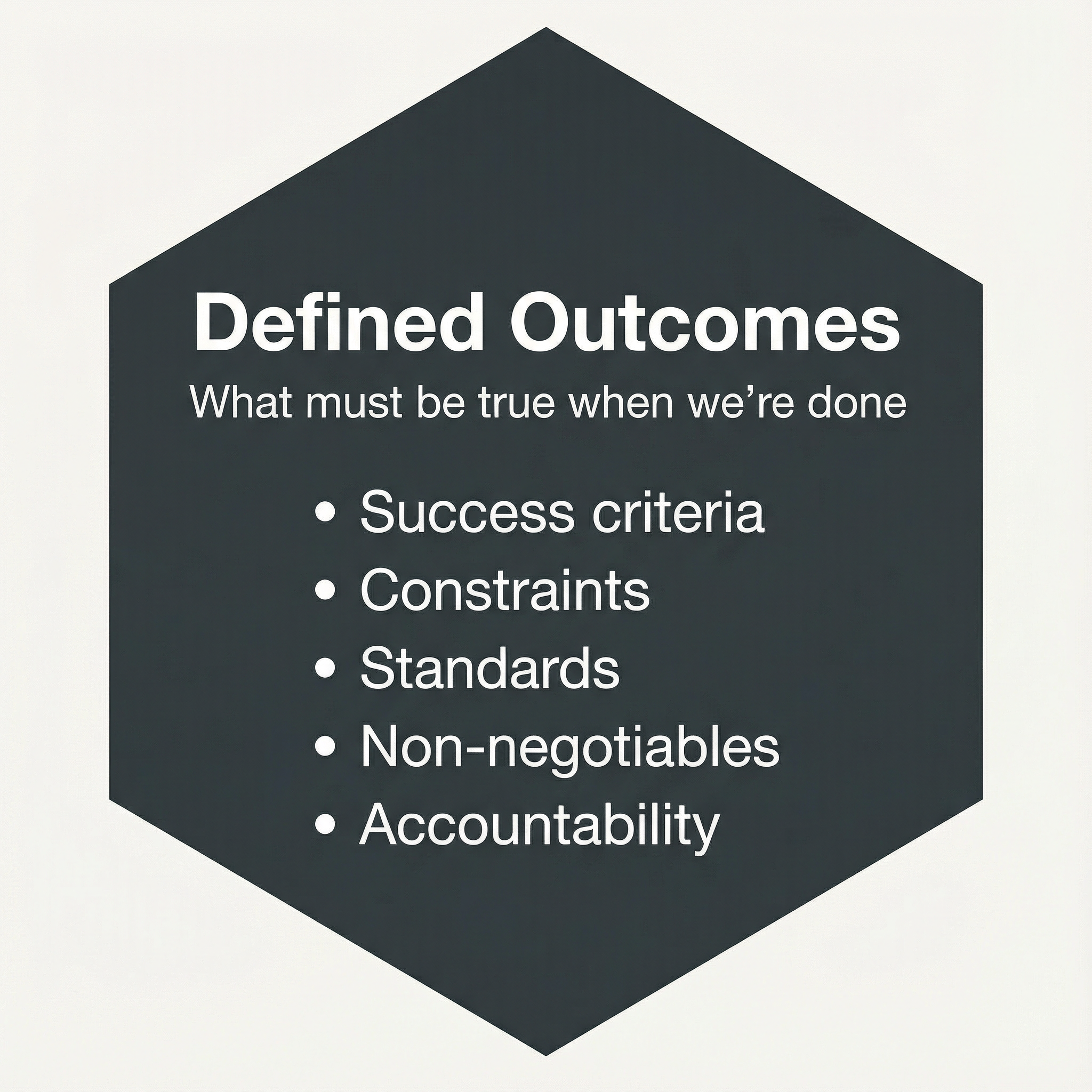
Defined Outcomes
How Authority Actually Works
Leadership defines what must be true when we're done, including:
Performance expectations
Budget and schedule constraints
Sustainability goals
Design intent
Quality standards
Outcomes are explicit. Ambiguity here creates chaos downstream.
Teams should never have to guess what success looks like.
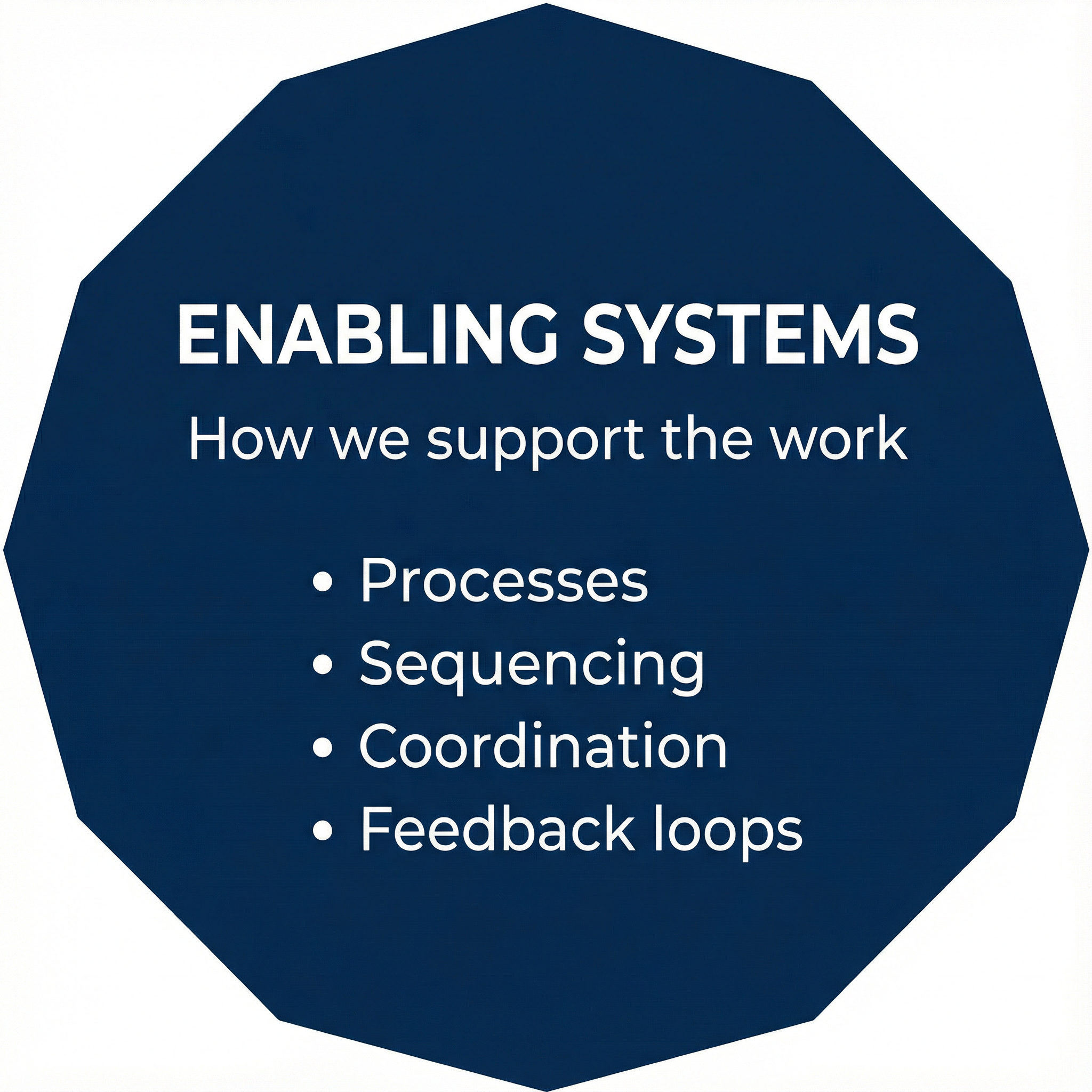
Enabling Systems
How the Work Is Supported
Managers translate outcomes into:
Processes
Sequencing
Coordination
Communication rhythms
Feedback loops
Systems exist to make good work easier, not to control people.
If a system adds friction without adding clarity, it should be questioned.
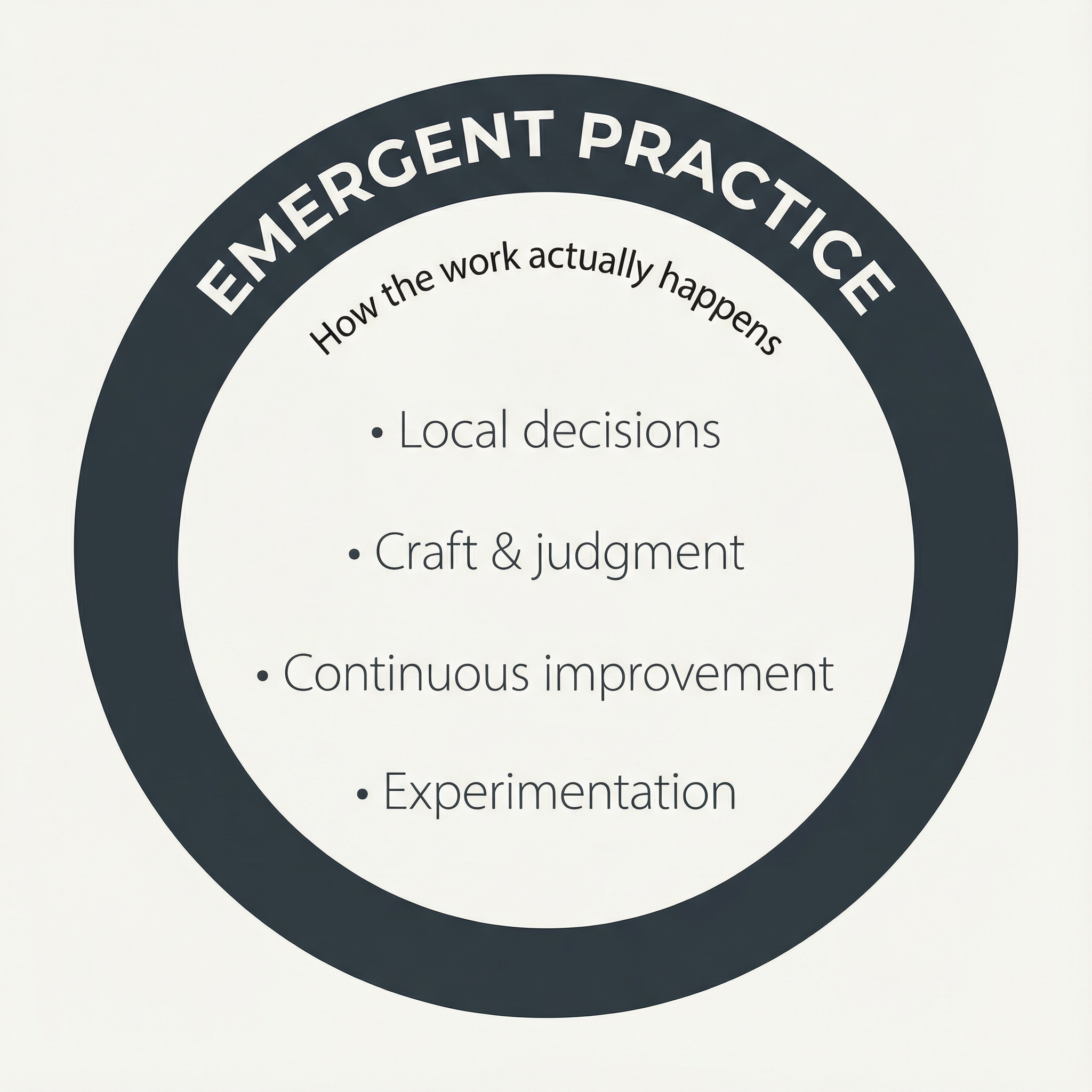
Emergent Practice
How the Work Actually Happens
This is where craft, judgment, expertise, and experimentation live.
Craft
Judgment
Expertise
Experimentation
Different projects require different approaches.
We expect variation.
We value learning.
Best practices are inputs—not mandates.
Feedback
Ownership and Learning
- →Surface it early
- →Propose a solution
- →Ask for help when needed
Silence is not agreement.
How This Model Can Fail
This structure breaks when:
Leaders avoid clarity
Vague outcomes create confusion and rework
Managers over-control
Micromanagement kills autonomy and innovation
Teams abdicate ownership
Waiting for permission instead of deciding
Decisions drift upward
Authority collapses back to leadership
Learning is punished
Mistakes become hidden instead of lessons
Drift goes unnoticed
Small misalignments become systemic failures
If you see drift, say something early.
Final Anchor Question
What decision best honors our purpose, our standards, and the people who trust us with their homes?